How to Start Freelance Frontend Development in 2026
Start freelance frontend development with practical service offers, portfolio positioning, pricing, client discovery, scoping, delivery, and risk management.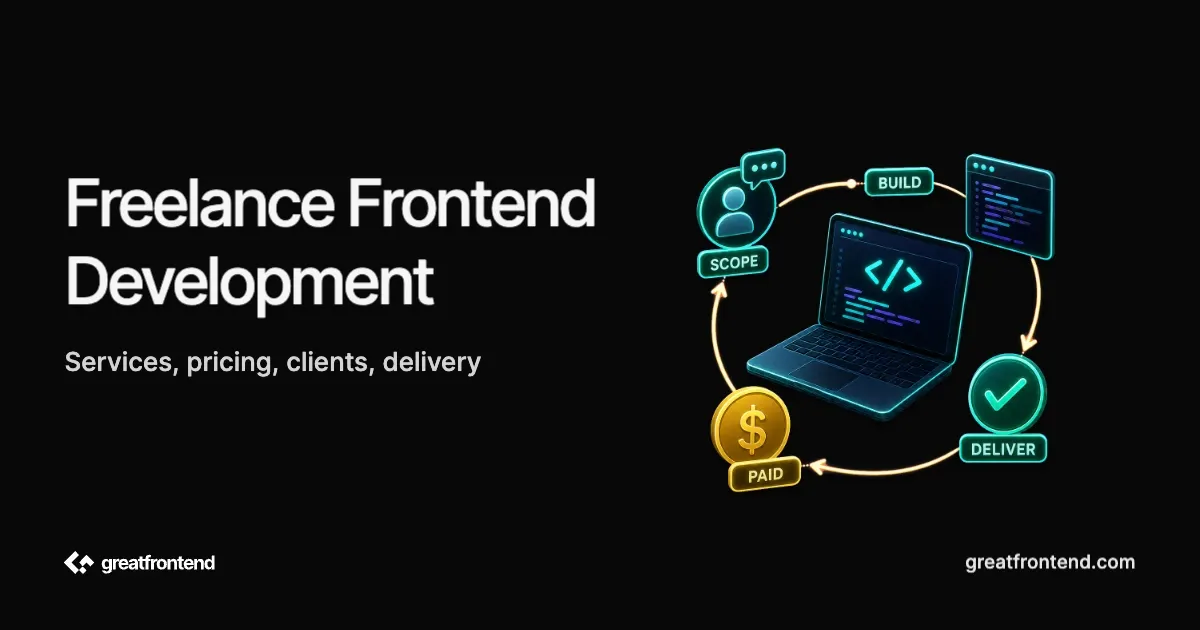
To start freelance frontend development, sell a specific service with a clear outcome, scope, price logic, and handoff. Clients rarely buy "frontend development" as an abstract skill. They buy a faster landing page, a usable dashboard, a fixed checkout bug, a coded Figma design, or a website they can finally ship.
The hard part is not only writing React or CSS. The hard part is choosing a small enough offer, proving you can deliver it, asking the right questions before quoting, and protecting both sides from vague scope.
Use MDN's web development curriculum and React Learn for skill gaps. The sections below cover the parts those technical curricula do not: offer, proof, scope, pricing, delivery, and risk.
The direct answer
Start with this sequence:
- Pick one service package.
- Build one proof project that matches that package.
- Write a one-page case study with the problem, constraints, decisions, and result.
- Prepare a discovery-question checklist.
- Offer a small paid project with written scope, milestone payment, revision limit, and handoff notes.
Do not begin by saying "I can build anything." That is hard to trust and hard to price.
Choose a service, not a vague identity
"Freelance frontend developer" is a role. A service is a thing a buyer can understand.
| Service package | Client problem | Good first scope | Proof to show |
|---|---|---|---|
| Landing page build | Needs a launch page or campaign page | 1-3 pages, responsive layout, contact form, analytics, deploy | Live page, Lighthouse notes, mobile screenshots |
| Figma-to-code | Has design but needs implementation | Existing design, content provided, limited component set | Pixel-careful build, responsive behavior, handoff notes |
| Website cleanup | Existing site is slow, broken, or messy | One page or small set of UI bugs with before/after notes | Before/after screenshots and performance checks |
| Dashboard UI slice | Internal team needs a cleaner workflow | One table, filters, forms, loading/error states from existing API | Demo with realistic data states |
| Component library slice | Product has inconsistent UI | Buttons, inputs, modals, cards, and usage docs for one team | Small documented component set |
| Accessibility fix sprint | Forms, modals, or navigation block some users | Audit and fix one flow | Keyboard walkthrough and issue list |
Pick the service where you can make the buyer's risk feel small.
Build proof that matches the buyer's problem
A portfolio full of unrelated clones rarely wins freelance trust. A client wants to know: have you solved my kind of problem before?
For one service package, create:
- A live demo.
- A short case study.
- Three screenshots: desktop, mobile, and the hard state.
- A checklist of what you tested.
- A handoff note explaining deployment, environment variables, forms, analytics, and known limits.
The case study does not need a famous client. It needs a believable problem and clear judgment.
Use this structure:
Problem: What was broken or needed?Constraints: Deadline, content, design, data, budget, or tech limits.Decision: What did you choose and why?Tradeoff: What did you intentionally not do?Verification: How did you test it?Result: What changed for the user or client?
That is stronger than a grid of screenshots with no context.
Price after scope, not before
Early freelancers often answer "how much?" too quickly. Price is a function of scope, uncertainty, timeline, revision count, integration risk, and client readiness.
Ask before quoting:
- What is the business goal of this work?
- What pages, flows, or components are included?
- Is design ready? If yes, where is it?
- Who owns copy, images, brand assets, and legal text?
- Are there forms, payments, analytics, CMS, auth, or API integrations?
- What browsers and devices matter?
- What happens after handoff?
- Who approves the work?
- How many revision rounds are expected?
- What is the deadline and why?
If the answers are fuzzy, sell discovery or a small paid audit before the build.
Understand pricing models
There is no single correct pricing model. Use the one that matches risk.
| Model | Use when | Watch out for |
|---|---|---|
| Hourly | Scope is uncertain, debugging is open-ended | Client may fear uncontrolled cost |
| Fixed package | Scope is clear and repeatable | You absorb mistakes in estimation |
| Milestone | Project has phases: audit, design handoff, build, QA | Needs clear acceptance criteria per milestone |
| Retainer | Client needs ongoing updates | Must define response time, included hours, and exclusions |
| Paid discovery | Requirements are unclear | Some clients may resist paying before a visible build |
For your first few projects, small fixed packages or milestone work is usually easier to explain than an open-ended project.
Write scope like a professional
Scope is not bureaucracy. Scope is how you protect the project.
Included:- Pages or flows- Responsive breakpoints- Forms and integrations- Content source- Browser support- Accessibility checks- Performance check- Revision rounds- Deployment and handoffNot included:- Copywriting- Logo or brand strategy- Backend changes- Extra pages- Ongoing maintenance- SEO strategy- Content migration- New features after approval
The "not included" section is where many beginner freelancers save themselves.
Use a proposal that removes uncertainty
Your proposal should make the buyer feel, "This person understands the work."
Goal:Build a responsive landing page for [campaign/product] so visitors can understand the offer and submit the contact form.Included:- One landing page based on provided copy and assets- Mobile, tablet, and desktop layout- Contact form connected to [tool]- Basic analytics event for form submit- Accessibility and link checks- Deployment handoffNot included:- Copywriting- Logo design- Backend work- Ongoing content updatesTimeline:[Start date] to [handoff date], with review on [date].Payment:[Deposit] before start, [final payment] before handoff.Revisions:Two revision rounds for included scope.
Do not send a clever proposal. Send a clear one.
Run a simple delivery workflow
Freelance trust comes from predictable communication.
- Discovery: goals, scope, assets, risks, decision maker, deadline.
- Proposal: included work, excluded work, milestones, price, revision limit.
- Agreement and payment: document the scope, acceptance criteria, payment schedule, ownership transfer, cancellation terms, and local tax obligations. Use a contract suitable for your jurisdiction; a template is not legal advice.
- Build: send milestone updates, not constant unfinished screenshots.
- QA: test forms, links, mobile widths, keyboard behavior, performance basics, and deployment.
- Handoff: repository, deployment notes, credential checklist, maintenance notes.
- Close: ask for testimonial, referral, or next maintenance scope.
The workflow can be small. It should still exist.
Know the quality bar for frontend freelance work
Even a small freelance project needs more than the happy path.
| Area | Minimum check |
|---|---|
| HTML | Correct headings, labels, buttons, links, and image alternatives; decorative images use empty alt text |
| CSS | No broken layout at common mobile and desktop widths |
| JavaScript | Forms handle validation, disabled states, and errors |
| Accessibility | Keyboard path works for navigation, forms, modals, menus |
| Performance | Images sized correctly, obvious render blockers removed |
| Analytics | Important events fire once and are named clearly |
| Handoff | Client knows where code, hosting, credentials, and docs are |
You do not need enterprise process. You need enough discipline that the client does not inherit a mystery.
Find clients with specific outreach
Freelance outreach works better when the message is tied to a visible problem.
| Channel | Best fit | What to send |
|---|---|---|
| Local businesses | Landing pages, forms, speed fixes | One specific issue and a small package |
| Designers | Figma-to-code collaboration | Responsive implementation sample and handoff workflow |
| Founder communities | Product pages, MVP UI, dashboard slices | Demo matching their product stage |
| Past coworkers and friends | Trusted first projects | Short note naming exactly what you now offer |
| Agencies | Overflow implementation work | Portfolio, availability, tech stack, and delivery boundaries |
| Open-source or communities | Reputation and referrals | Helpful fixes, not spam |
Bad outreach says, "Do you need a frontend developer?" Better outreach names a problem you personally verified, the reproduction steps, and a small scope to investigate it. Do not invent a browser bug from a quick visual scan.
Use a better outreach message
Hi [Name],I noticed [specific issue or opportunity]. I help [type of client] with [specific frontend service].For example, I can [deliverable] in [timeframe] if the content/design is ready.Here is a similar example: [link].Would it be useful if I sent a short scope for this?
Keep it short. The goal is a conversation, not a full sales pitch.
Watch for red flags
Some projects are not worth winning.
- No single decision maker.
- Wants fixed price without fixed scope.
- Refuses deposit or written agreement.
- Needs urgent work but cannot provide assets.
- Says "it is simple" while requirements keep changing.
- Wants unpaid custom work before trust exists.
- Treats accessibility, testing, or handoff as optional but will blame you when things break.
- Cannot describe what success means.
Early in freelancing, your biggest risk is not low price. It is undefined scope.
Make your first 30 days concrete
Week 1: choose and package
Pick one service. Write:
- Who it is for.
- What it includes.
- What it excludes.
- What inputs you need.
- What proof you can show.
Week 2: build proof
Create or polish one project that matches the service. Add the case study, screenshots, and handoff note.
Week 3: prepare delivery assets
Create:
- Discovery questions.
- Proposal template.
- Scope checklist.
- QA checklist.
- Handoff note template.
Week 4: outreach and feedback
Contact 20 targeted people or businesses. Track replies, objections, and patterns. Improve your offer based on what buyers misunderstand.
Common questions
Should I start on freelance platforms?
You can, but do not depend on platform listings alone. They are competitive and often reward speed more than judgment. Use them as one channel while building direct outreach, referrals, and a portfolio that explains a specific service.
Do I need a full portfolio before taking clients?
You need enough proof for the service you sell. One focused case study can be better than five random projects. If you sell landing pages, show a landing page. If you sell dashboard UI, show data states, filters, forms, and handoff discipline.
Should I charge hourly or fixed price?
Use hourly or paid discovery when the work is unclear. Use fixed price only when scope, inputs, revisions, and handoff are clear. If the client cannot define the work, do not pretend you can price it safely.
What should I avoid offering at the beginning?
Avoid large open-ended products, complex backend ownership, vague redesigns, unlimited revisions, content strategy, brand identity, and "maintenance" without boundaries. Start with work you can scope, finish, and defend.
How do I get repeat work?
Make handoff easy, send clear updates, document decisions, and point out useful next steps. Repeat work comes from clients feeling that you reduce stress, not only that you write code.
Before you pitch your first client
Your first freelance offer should feel small enough to buy and clear enough to finish.
Have these ready before outreach:
- One service package for one buyer type.
- One proof project that matches the service.
- A case study with problem, constraints, decision, verification, and result.
- A proposal template with included and excluded work.
- A discovery checklist for scope, assets, integrations, deadline, and decision maker.
- A handoff note template so the client knows what they receive at the end.
Freelancing becomes less scary when the offer is small, the proof is visible, and the scope is written before the code begins.
Related articles
 Learn what to build for a frontend developer portfolio in 2026, how to structure case studies, and how to prove frontend skill beyond screenshots.
 Learn how freshers can build a frontend developer portfolio with no experience using beginner-friendly projects, GitHub, case studies, and clear proof.
 Learn how to find remote frontend developer jobs in 2026, evaluate good roles, prepare your portfolio, and prove you can work well remotely.
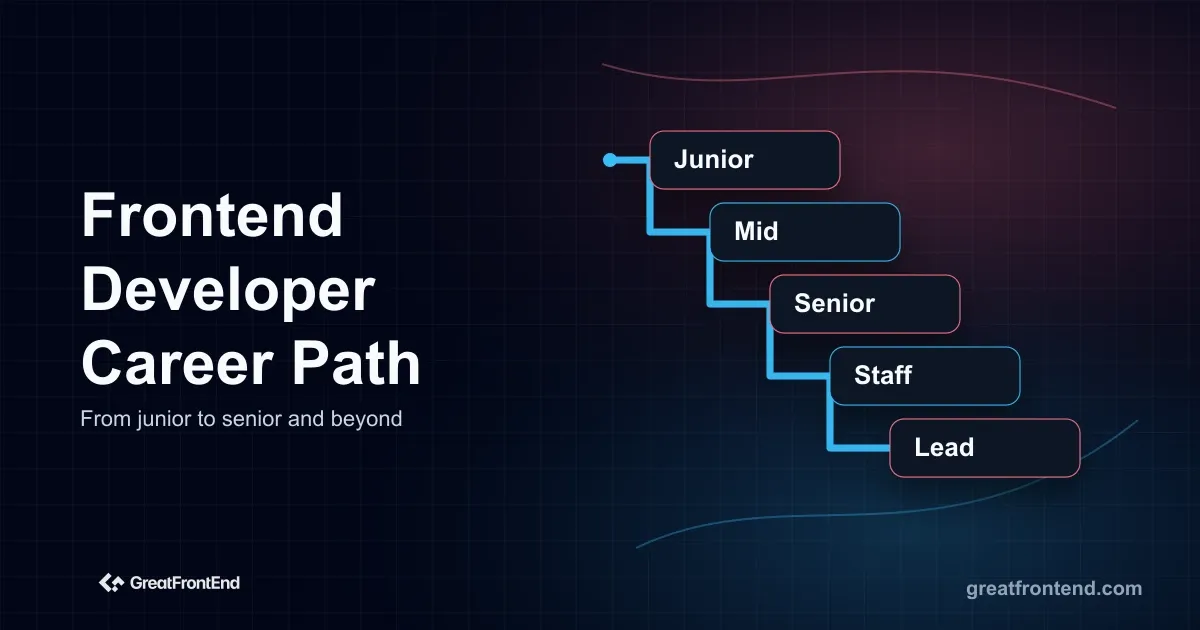 Map the frontend developer career path in 2026 from junior to mid-level, senior, staff, lead, specialist, and manager roles.