Frontend Developer Salary Negotiation: Scripts and Strategies That Work (2026)
Negotiate frontend developer salary with a clear target range, offer-stage scripts, frontend impact proof, India CTC checks, and calm counter-offer language.
Frontend developer salary negotiation works best when you know the full offer breakup, define your target range before the call, and explain why the role maps to your scope. Do not negotiate from one isolated salary number.
In India, that means looking past CTC and checking fixed pay, variable pay, joining bonus, ESOPs, notice-period buyout, level, review timing, and work mode. The goal is not to sound aggressive. The goal is to make a specific ask that a recruiter, hiring manager, or compensation team can approve.
Start with the right negotiation moment
You can discuss compensation expectations early, but the serious negotiation should happen after the company has decided it wants you.
| Stage | What to do | What to avoid |
|---|---|---|
| Recruiter screen | Ask for the role range and share a researched range if required | Locking yourself to a low number before you know scope |
| Final rounds | Learn level, team, ownership, and expected first-90-day work | Arguing pay before the company has buy-in |
| Verbal offer | Ask for the complete breakup and decision timeline | Accepting on the call |
| Written offer | Counter with one or two clear changes | Reopening every component repeatedly |
| After accepting | Negotiate only if the written terms changed | Treating acceptance as another bargaining stage |
If the recruiter asks for an expected salary early, answer with a range tied to role scope:
I am calibrating by level and ownership. For a frontend role with this scope,I am targeting INR X-Y total compensation, with at least INR Z fixed.Does that fit the range approved for this role?
Build your three numbers before the call
Do not wait for the offer call to decide what you want. Write three numbers first.
| Number | Meaning | How to choose it |
|---|---|---|
| Walk-away floor | The lowest offer that still makes sense | Your current role, cash needs, commute, risk, and alternatives |
| Target | The offer you would be happy to accept | Market data, role scope, interview signal, and company type |
| Stretch ask | A high but defensible ask | Strong interview signal, competing offer, rare skill fit, or level mismatch |
For example, a mid-level frontend engineer moving from a services role to a product role might use this purely hypothetical worksheet:
- Walk-away floor: 16 LPA fixed; anything below that makes the switch too weak.
- Target: 19-21 LPA total compensation with at least 17 LPA fixed.
- Stretch ask: 23 LPA total compensation if the company can use joining bonus, equity, or level mapping.
The useful part is the structure: fixed-pay floor, target range, and fallback levers.
Use salary data without sounding random
Salary pages measure different markets. Use them to build a range, not to quote one number as truth.
| Source | Mid-2026 signal | How to use it |
|---|---|---|
| Glassdoor India front end developer salaries | Visible page data showed about Rs 6L average base pay and a Rs 4L-10L base range | Broad frontend title calibration; self-reported and title-dependent |
| PayScale India Front End Developer / Engineer salary | Rs 652,671 average base salary from 904 profiles, last updated May 17, 2026 | Base-salary reference by role, skill, city, and experience |
| Indeed India front end developer salaries | Rs 6,74,955 average base salary from 154 reports, updated June 27, 2026 | Live job-market signal; sample size is smaller |
| NodeFlair India frontend developer salary | Rs 62,500/month median base and Rs 37,500-1,87,500/month displayed range, updated July 12, 2026 | Monthly base salary and job-listing context |
| Levels.fyi India software engineer salaries | About Rs 29.7L median total compensation for software engineers, last updated July 12, 2026 | Submitted SWE total comp; useful for product and big-tech calibration, not frontend-only averages |
A weak negotiation says, "Glassdoor says the average is X." A stronger one says:
The broad frontend market data is one input, but this role is closer to aproduct frontend engineer role with TypeScript, design system ownership, andperformance responsibility. Based on that scope, I am targeting INR X-Y, withat least INR Z fixed.
Turn frontend work into compensation proof
Frontend pay increases when the company sees reduced product and engineering risk. Translate your work into that language.
| Frontend proof | Better negotiation framing |
|---|---|
| Built reusable components | "I have owned component APIs used by multiple teams, which reduces duplicated UI work." |
| Improved performance | "I have improved LCP, bundle size, or slow interaction paths on revenue-facing pages." |
| Led React or TypeScript work | "I can own migrations without blocking feature teams." |
| Fixed accessibility issues | "I can make forms, modals, navigation, and keyboard flows safer before launch." |
| Debugged production UI issues | "I can handle browser-specific failures, release regressions, and API-state edge cases." |
| Owned a product flow | "I have shipped user-facing flows where frontend quality affected conversion or retention." |
This is more useful than saying you know React, Next.js, CSS, and TypeScript. Tools are expected. Ownership is what makes the compensation case stronger.
Ask for the full breakup before reacting
When the offer arrives, do not negotiate the first number you hear. Ask for the full package.
Thank you. I am excited about the role. Before I respond to the number, couldyou share the complete breakup: fixed annual gross, variable pay, joining bonus,equity or ESOPs, level, review cycle, benefits, and any clawback terms?
If the company gives only a CTC headline, ask again. A 24 LPA CTC offer can be weaker than an 18 LPA offer if the first one hides high variable pay, illiquid ESOPs, or a large one-time component.
Use How to Evaluate a Tech Job Offer in India for the deeper CTC breakdown. In this article, the important point is simple: do not counter until you know which levers can move.
Use scripts for common moments
Scripts keep you calm when the call gets uncomfortable.
| Situation | What to say |
|---|---|
| Asked current CTC | "I would prefer to evaluate this role by scope and approved range. My current package is not the best benchmark for this opportunity. For this role, I am targeting INR X-Y." |
| Required to share current CTC | "My current compensation is INR A, with INR B fixed. For this move, I am looking for a package aligned with the role scope, closer to INR X-Y." |
| Offer is lower than target | "I am excited about the team and the work. The gap for me is compensation. Based on the level and scope, I was expecting something closer to INR X-Y. Is there flexibility to improve the offer?" |
| Fixed pay is low | "The main concern is fixed compensation. Could we move fixed pay closer to INR X, even if variable stays unchanged?" |
| Base salary cannot move | "If base is capped, could we explore joining bonus, equity, level mapping, review timing, or relocation support?" |
| Equity is unclear | "Can you share the grant type, vesting schedule, strike price if it is options, liquidity assumptions, tax timing, and what happens if I leave before vesting?" |
| You have another offer | "I have another offer with stronger compensation, but I prefer this role because of the team and scope. If we can get closer to INR X, I would be comfortable moving forward." |
| Deadline is too short | "I want to make a thoughtful decision. I am reviewing the written breakup and wrapping up one process. Can I come back by [date]?" |
| Appraisal or internal raise | "My scope has moved from implementation to ownership of [system/flow/team outcome]. I would like my compensation reviewed against that scope, not only the previous band." |
Use honest facts. Do not invent competing offers, fake deadlines, or numbers you cannot defend.
Make one clear counter-offer
A counter-offer should be easy to forward internally. Keep it specific.
Thank you for the offer. I am excited about the role because [specific reason].After reviewing the breakup, the main gap is [fixed pay / total compensation /level / joining bonus / equity clarity]. Based on the role scope and the marketdata I am seeing for similar frontend roles, I was expecting closer to INR X-Y,with at least INR Z fixed.Is there flexibility to improve [specific component]?
If you ask for every component at once, the recruiter has a harder internal case. Choose the highest-value ask first.
| Your real concern | Best first ask |
|---|---|
| Monthly cash is too low | Increase fixed annual gross |
| Offer is fair but first-year switch cost is high | Joining bonus or relocation support |
| Role sounds senior but title is lower | Level mapping or written review path |
| Equity is meaningful but vague | Vesting, strike price, liquidity, and refresh policy |
| Current offer is close but not enough | Earlier compensation review date |
| Commute or office policy changes the value | Remote or hybrid terms in writing |
Compare the offer with your real alternative
Negotiation power comes from alternatives. The Harvard Program on Negotiation calls this your BATNA: what you will do if there is no deal.
For a frontend developer, that alternative might be:
- Staying in the current role and waiting for appraisal.
- Continuing interviews for product or GCC roles.
- Accepting another offer with higher fixed pay.
- Taking a lower-cash role because the scope is much stronger.
Do not compare only headline CTC. Compare your alternative on fixed cash, learning, manager quality, role scope, commute, equity risk, and future options.
Watch India-specific offer traps
These are the details that often change the real value of an offer.
| Offer item | Question to ask |
|---|---|
| Fixed pay | What is the annual fixed gross before tax and deductions? |
| Variable pay | Is it guaranteed, target-based, or discretionary? What was the recent payout percentage? |
| Joining bonus | Is there a clawback period? Is repayment gross or net of tax? |
| ESOPs or options | What is the strike price, vesting schedule, exercise window, dilution risk, and liquidity history? |
| RSUs | What is the vesting schedule, first vest date, and refresh policy? |
| PF and gratuity | Are employer contributions included inside CTC? |
| Notice-period buyout | Who pays it, when, and under what documentation? |
| Review cycle | When is the first compensation review after joining? |
| Work mode | Is remote or hybrid policy written into the offer or only discussed verbally? |
If a company cannot explain the breakup calmly, treat that as information. It may not mean you should reject the offer, but it means you should slow down.
Worked example: the higher CTC is not always better
Offer A:
- 24 LPA CTC
- 14 LPA fixed
- 4 LPA variable
- 3 LPA joining bonus with 18-month clawback
- 3 LPA ESOP value with unclear liquidity
Offer B:
- 20 LPA CTC
- 18 LPA fixed
- 1 LPA variable
- 1 LPA joining bonus
- Clear level and first review in six months
Offer A has the bigger headline. Offer B may be the stronger offer if you care about predictable cash, clean terms, and level clarity.
A good counter for Offer A would not be "Can you increase CTC?" It would be:
The role is exciting, but the fixed component is the gap. If we can move fixedpay closer to 17-18 LPA, I would be comfortable moving forward even if the totalCTC structure stays mostly the same.
That gives the company a precise problem to solve.
Before you send the counter
Use this checklist before replying to the recruiter.
- Write fixed pay, variable pay, equity, joining bonus, and benefits separately.
- Mark each item as guaranteed, likely, uncertain, or risky.
- Confirm level, team, manager, first project, and review timing.
- Choose one main ask and one fallback ask.
- Prepare one sentence explaining your frontend value.
- Decide your walk-away floor before the call.
- Keep the tone positive, specific, and written down.
The cleanest negotiation is not a dramatic argument. It is a clear offer review, one defensible counter, and a calm explanation of why the ask matches the frontend scope.
Related articles
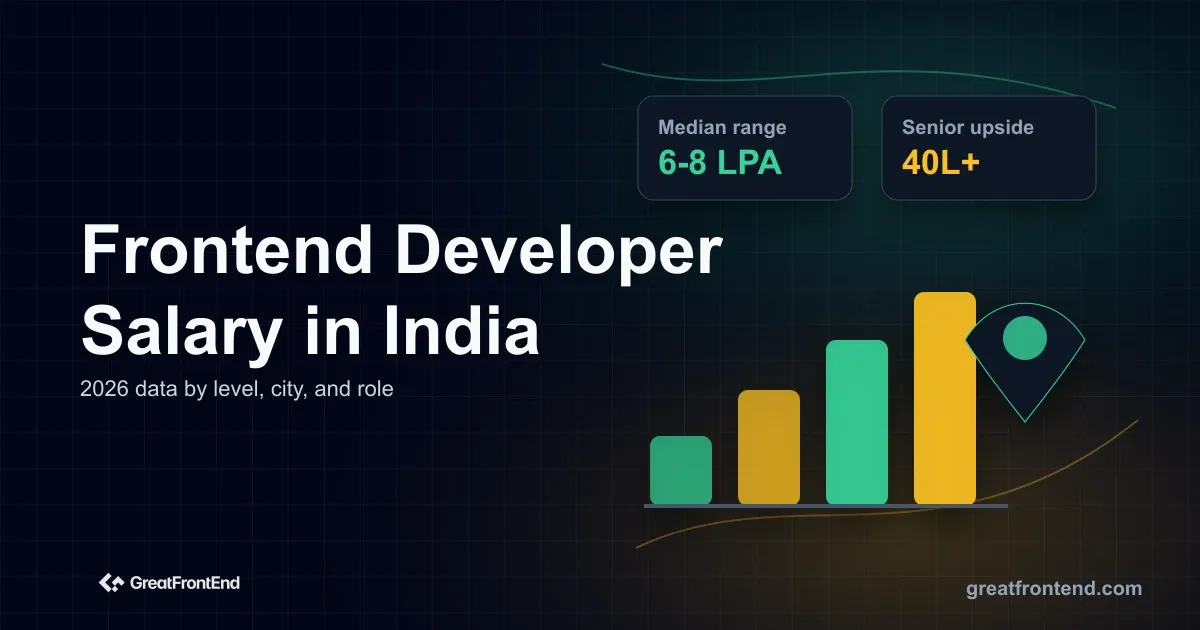 A 2026 India frontend developer salary guide using Glassdoor, PayScale, Indeed, NodeFlair, Adecco, and AmbitionBox data with caveats by level, city, and employer type.
 Evaluate a tech job offer in India by separating fixed pay, variable, PF, gratuity, RSUs, ESOPs, insurance, notice period, tax, role quality, and risk.
 Learn the senior frontend developer skills that matter in 2026, from UI architecture and accessibility to performance, testing, judgment, and AI verification.
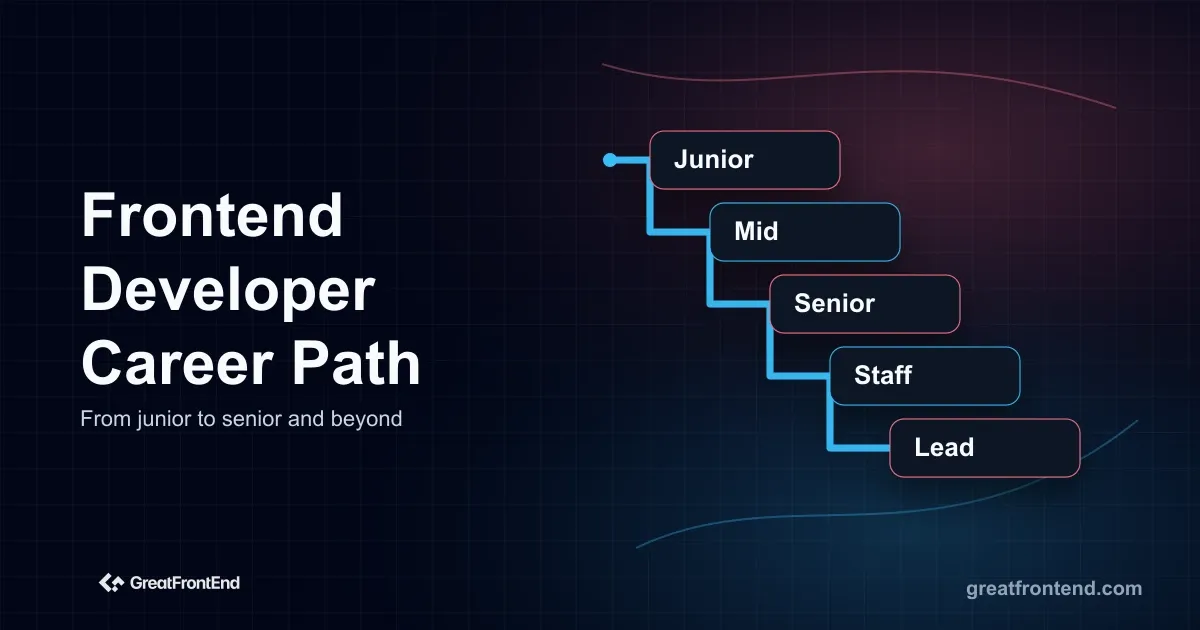 Map the frontend developer career path in 2026 from junior to mid-level, senior, staff, lead, specialist, and manager roles.